
The size and geographic complexity of many FTSE100 companies means that senior executives are often exposed to the global competitiveness debate; companies are responding to this challenge in individual ways, often with tailored solutions. This briefing provides early insight into the trends for this year’s remuneration decisions made by FTSE100 companies, most of which have now reported.
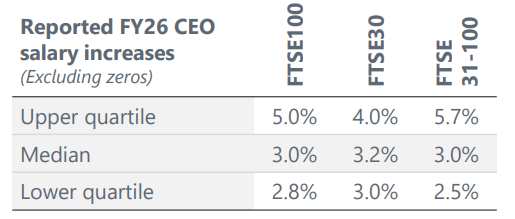
FY26 salary increases:
The median FTSE100 CEO salary increase for 2026 was 3.0%. This is in line with the average increase awarded in recent years and slightly below the 3.2% median increase for employees in FY26. 16% of companies froze CEO salaries for 2026 and 17% awarded increases higher than the workforce rate.
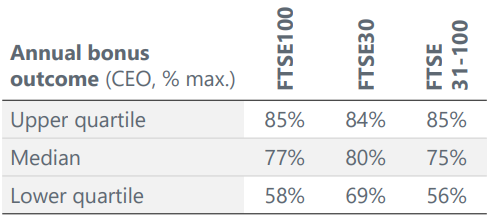
FY25 annual bonus outcomes:
The median annual bonus outcome for FY25 was 77% of maximum for FTSE100 CEOs, a slight decrease on recent outcomes (FY24: 80%). FTSE30 outcomes were similar, albeit with a narrower interquartile range, reflecting the higher outcomes that are typically seen in larger companies.
Nine companies disclosed having applied downwards discretion to the FY25 bonus outcome, primarily due to health and safety factors, with others adjusting outcomes to better reflect financial performance. Two companies applied upwards discretion following a positive review of business performance and the stakeholder experience.
FY23-FY25 Performance Share Plan (PSP) outcomes:
The median PSP vesting for performance periods ending FY25 was 79% of maximum, slightly above last year and the longer-term averages (FY24: 75%; 5-yr average 68%). Whilst the upper quartile vesting level is comparable to that in previous years, there was a noticeable decrease in the lower quartile outcome. This decrease is partly due to the proportion of companies (11%) recording nil vesting this year
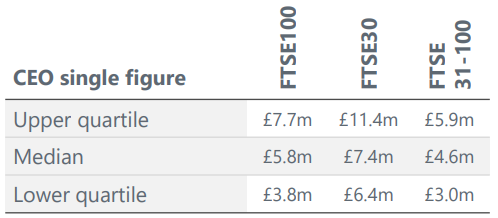
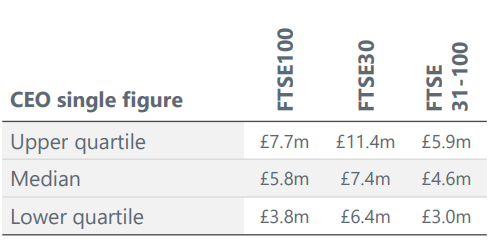
CEO single figure:
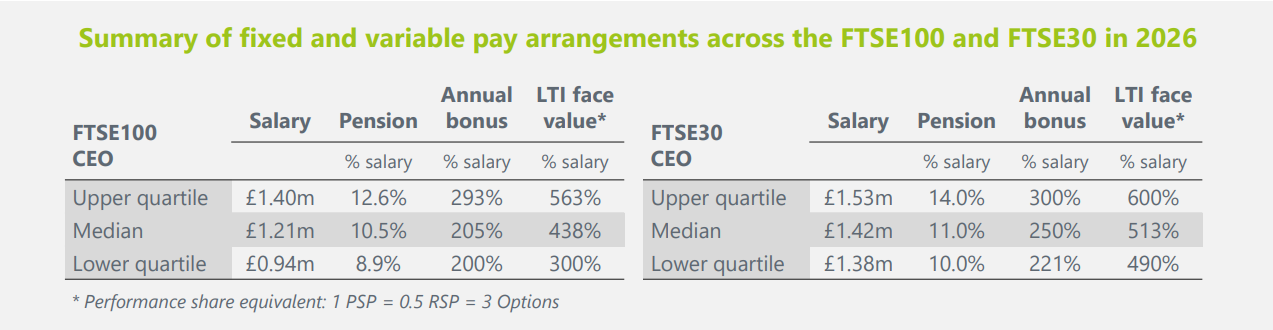
The median FTSE100 CEO single figure has risen 14% year-on year, mostly due to the share price appreciation on share-based awards. Notably, the median CEO single figure for the FTSE30 is 28% higher than that of the FTSE100, partially reflecting the higher incentive opportunities at the upper end of the FTSE.
Remuneration policy changes:
43% of the companies reviewed are submitting their remuneration policies to a binding shareholder vote at this year’s AGM. Four companies are holding an early vote, ahead of the standard three-year cycle. Four companies have made minimal changes to their policies, essentially rolling over the existing arrangement. Of the companies making more substantial changes, the primary changes are:

Increasing incentive opportunities
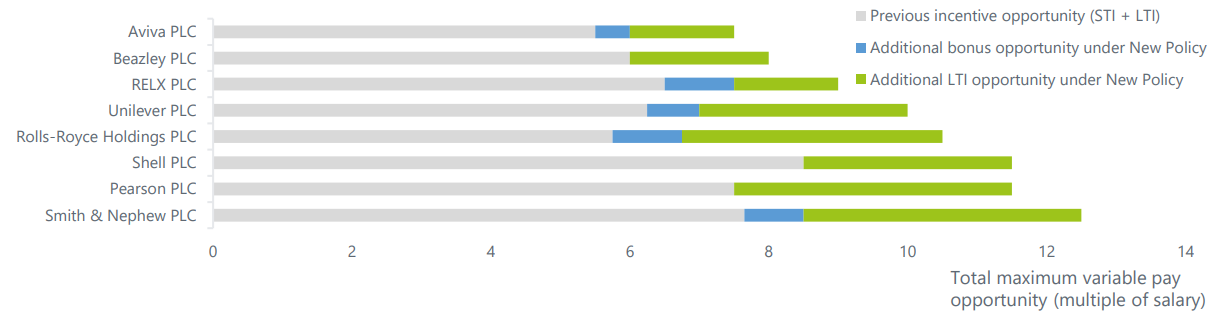
Eight of the companies analysed have increased the total variable pay opportunity by more than 200% of salary. Most companies justified these increases through the need to align pay levels with evolving company strategy, and with pay benchmarks for relevant talent markets (whether UK-focused or international). Historically, such proposals have drawn scrutiny from investors and proxy advisors, but recently shareholders have indicated a greater willingness to support such proposals when they are underpinned by compelling rationale and are tailored to company specific circumstances. The chart below shows the increases in CEO variable award opportunities among these eight companies, data is shown on a PSP equivalent basis.
Bonus deferral
This year, ten companies in the FTSE100 are proposing to soften bonus deferral requirements once an executive director meets the in-post shareholding requirement. This follows the trend seen since the Investment Association’s Principles of Remuneration allowed for a relaxation in the deferral requirements once shareholding guidelines have been met. Only three companies are waiving bonus deferral entirely, with the remainder typically reducing the deferral requirement by 50%.
Shareholding requirements
58% of FTSE100 companies submitting new policies are seeking to increase the in-post shareholding requirements for executive directors, usually alongside an increase in the long-term incentive opportunity; of the 18 companies that are increasing their LTI opportunity, 15 are opting to increase their share ownership guidelines as well. Any increase in the shareholding guideline level typically also flows through to the post-exit holding requirement.
Long-term incentive plan structures
Last year four FTSE100 companies introduced ‘hybrid’ plans, granting both performance and restricted shares. So far this year, no FTSE100 company is proposing to introduce a hybrid, perhaps suggesting that companies that were keen to adopt such a plan have already done so. In 2026 thus far, FTSE100 companies are instead favouring increases in performance related pay. However, two FTSE250 companies have introduced hybrid plans this year, suggesting that the appetite for structural change remains at some companies.
Which companies are included in the analysis?
The FTSE100 constituent list is based on the index as at 31 December 2025. FTSE30 constituents are the thirty largest FTSE-listed companies as at the same date. To ensure consistency in the reporting period covered, only the 60 companies with September or December year-ends with annual reports published by 31 March 2026 have been included in the analysis.
